by Marcela M. | Jun 29, 2011 | Blog, Cooking basics and tutorials, cupcakes, Recipe Box, Recipes, Sweets, Uncategorized
Hello there!
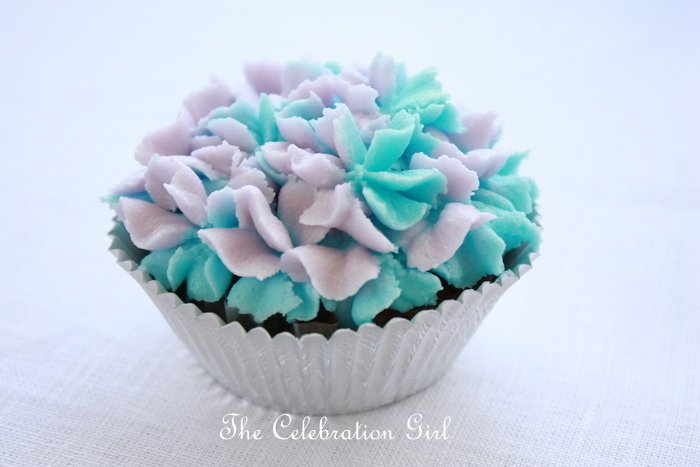
This blog is one month old today, so we’ll celebrate with a double post! In this one I’ll reveal the secret to my birthday’s flowery cupcakes and in the next one we’ll talk cake-pops.
The secret is…that there is no secret 😉 My flowery cupcakes were inspired by Glory Albin’s fabulous hydrangea cupcakes. I saw them in her blog, Glorious Treats, long ago, but the right occasion for making them never seemed to appear. Until my last birthday! And I will definitely be making them again.
My cupcakes were chocolate ones, as Glory’s, but I did not follow her recipe. I used, instead, one of the recipes that Bakerella shares in her book . This is a recipe my children LOVE, so if you have the book, I recommend it*. But if you don’t have the book, your favorite chocolate cupcake recipe will do. You could also try this one or this one (which Bakerella says adapts very well to cupcakes, without the frosting), which are delicious as well.
For the frosting, I used regular vegan buttercream, from the same batch I used for frosting my birthday cake.
How did I make those flowers? With the help of my trustworthy friend, Wilton’s 2D tip:
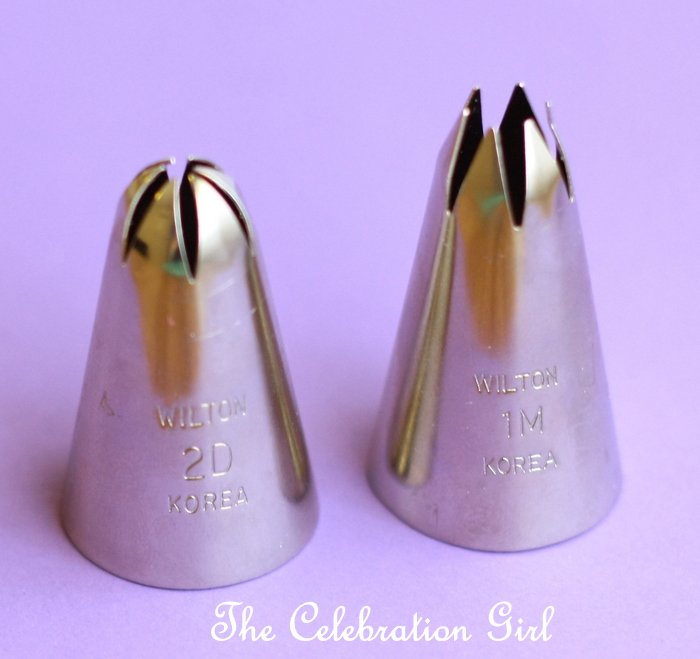
I divided the frosting in two, coloured each batch, put both colours side by side in the piping bag and then I simply piped the flowers. In order to see a VERY clear tutorial on how to do it, including pictures, check Glory’s blog here. Actually you should go visit her blog anyway because her confections, dessert tables and crafting ideas are truly amazing!
So there you have it: the secret to beautiful and easy hydrangea cupcakes!
I’ll see you later today with a post on cake-pops! Have a nice morning!
Note: There is a Dutch and a Brazilian version of Bakerella’s book “Cake Pops”. So one in Spanish may be on its way too!
by Marcela M. | Jun 27, 2011 | Blog, cookies, Cooking basics and tutorials, Recipe Box, Recipes, Sweets
Hello dear friends! How was your weekend? Are you ready to start a new week?
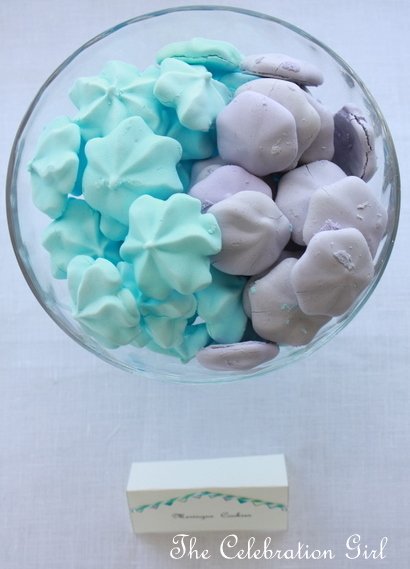
A few readers have asked me for the recipe of the meringue cookies I served at my birthday party, so here is all the information and a few tips.
The recipe I used for the cookies is The TomKat Studio‘s Susie’s Forgotten Meringue Recipe. I have been following Kim’s blog for a long time and I bookmarked this recipe the minute I saw it. In Argentina we call them “merenguitos” but the cookies from this recipe are softer and chewier than them. They just melt in your mouth!So if you want to do them, just click on the link above and follow the recipe (and after you do that, take a look and Kim’s beautiful creations, they are amazing!).
Before starting, make sure the bowl and all utensils you will use are very clean. In order to make sure they are spotless I spray a little bit of lemon juice in them and then wipe it out using a paper towel (a trick I learnt from Sweetapolita)
I am adding below a few tips for those who -like me- don’t own a stand mixer, and I hope you will find them useful if that is your case.
As I mentioned above, I do not own a Kitchen Aid or any other stand mixer*, so making some recipes becomes a challenge. What I do own is a Moulinex Masterchef 8000 food processor, which comes with a whisk attachment:
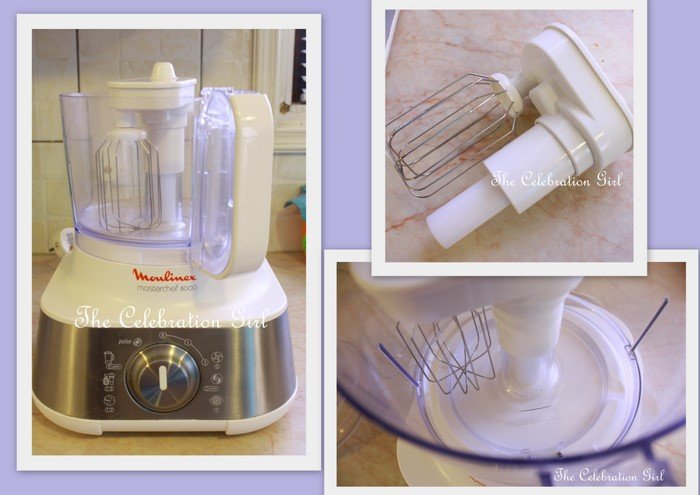
This type of machines have their limitations, and they are generally unable to reach really hard meringue peaks, or they leave a part of the batter unmixed (the one between the bottom of the bowl and the whisk). But they are still very useful (and definitelly better than beating by hand!).
What I will show you is the consistencies I worked with for making these meringue cookies. I am doing this because I know how frustrating it can be to watch pictures of preparations done with stand mixers, not being able to achieve such consistencies and not knowing whether the ones we can actually achieve are enough for the recipe.
The recipe mentions 3 different consistencies:
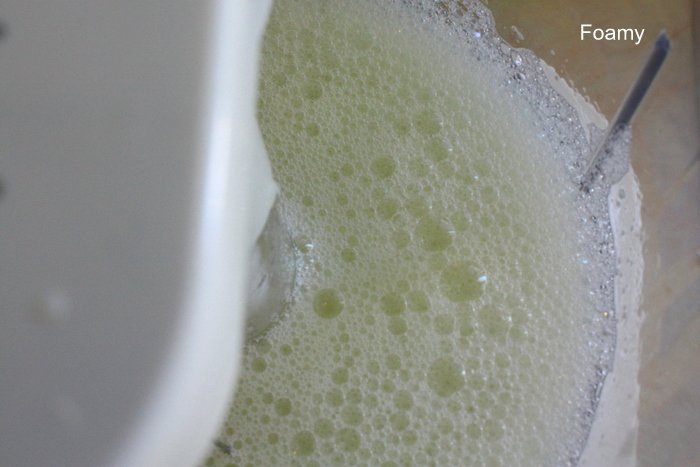
1) Foamy: When your egg whites look as below, add cream of tartar and salt.
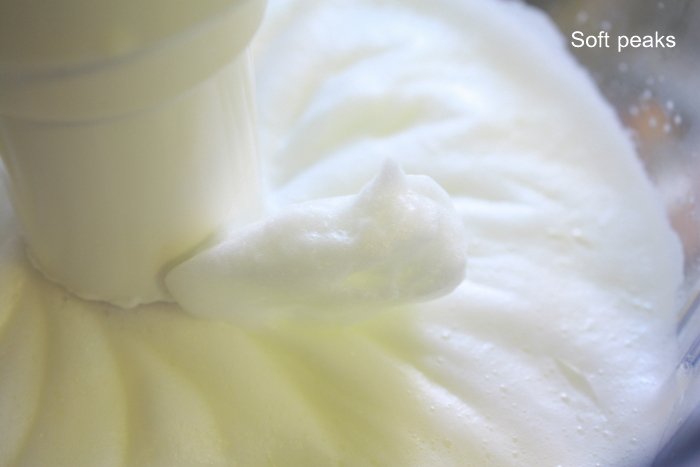
2) Soft peaks: When your egg whites look as below, start adding sugar:
3) Hard peaks: Continue beating until your meringue looks at least as in the picture below.The meringue has to be the harder consistency you can reach in order for the cookies to hold their shape (especially if you want a cute star shape), otherwise they won’t.
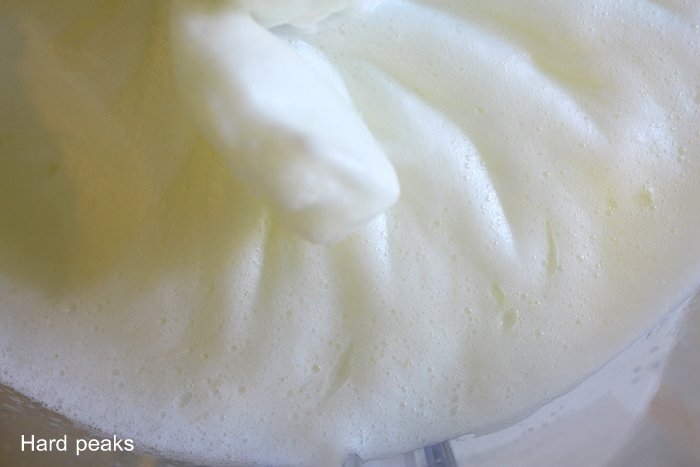
This is not the ideal consistency (which is harder) but is all my processor will achieve (after a good 15/20 minutes of beating at maximum speed) and enough to make these cookies. In order to make sure that they do hold their shape, it is a good idea to keep the meringue in the fridge (in a bowl covered with foil) for about 15 minutes, before putting it in the piping bag.
After your meringue is ready, just add colouring and put it into piping bags. For the cookies I made, I used a 2D and a 1M piping tip, for the aqua and lavender cookies, respectively. As you can see from the picture below, the 2D is a closed star tip and the 1M an open star tip. The cookies I piped with the 2D tip held their shape better than the ones I piped with the 1M tip.
Here is how the tips look from above, in case piping tips are classified in a different way where you live:
After you have piped all cookies, simply put them in the oven, following the recipe’s instructions. After they are ready, let them rest in the oven for several hours.
Here is a picture of my aqua cookies the day after I made them:
And this is all! They are cheap, easy to make, delicious to eat and look really pretty at a dessert table! Thank you Susie and Kim for sharing this recipe!
Will you make them?
* Kitchen Aid stand mixers are very expensive outside of the US (560 euros in Cyprus for example)
by Marcela M. | Jun 22, 2011 | Blog, Cakes, Recipe Box, Recipes, Sweets, Uncategorized

Since I published the pictures of the dessert table I created for my birthday, I received several questions about how I made this cake. So here go all the details!
The inspiration: I was inspired by this cake, from one of my favorite blogs, Call me cupcake, a place where food and art become one.
The recipe: For the batter, I used one of my very favorite recipes, the one for Country Living’s Lemon Blackberry Cake, which appears in the book Great Cakes (which I have listed in the amazon widget included in the right hand bar, because it has a wonderful compilation of amazing, reliable recipes). The quantities for one cake are enough for a two layer 9 inch cake or, as in this case, a 4 layer 6 inch cake. One of the beauties of this cake is that it bakes perfectly, and comes out of the even with an even top, so most of the time it is not necessary to level it.
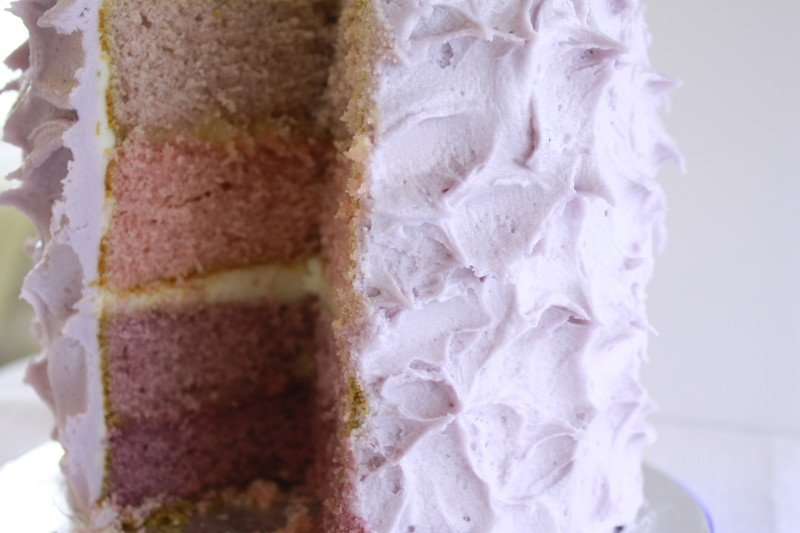
The ombré look: I baked each layer separately, as is recommended by the recipe. I followed the recipe’s baking times but watched it carefully just in case (since my layers were smaller than the ones of the original recipe)
Since I have two 6x 2 inch Wilton cake pans , I did it in 2 sets and put the batter in the fridge in the meantime. For colouring the layers I used a toothpick (I use Wilton gel colors) and added 4,3,2, and 1 toothpick of lavender to each layer. For the softer shades, I also added just a little tiny bit of pink.
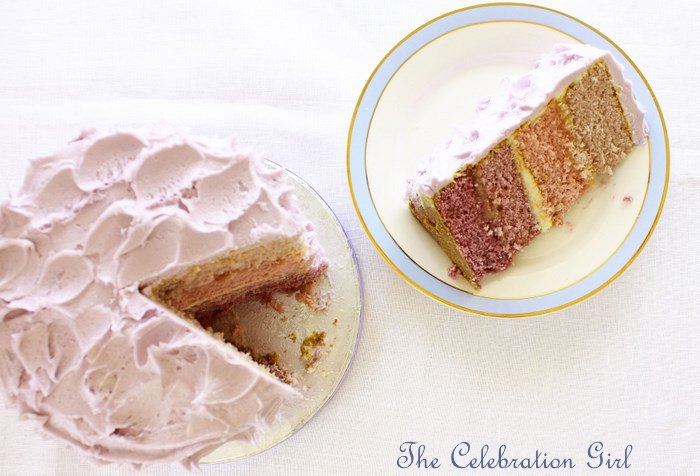
The Fillings: I filled the cake with two layers of lemon curd and one layer of vanilla buttercream. The buttercream was vegan, home- made, following this recipe (I used a combination of margarine and non-hidrogenated shortening). The lemon curd was store-bought because I was running out of time ;). When I do make my own lemon curd, I sometimes use this recipe from Country Living.
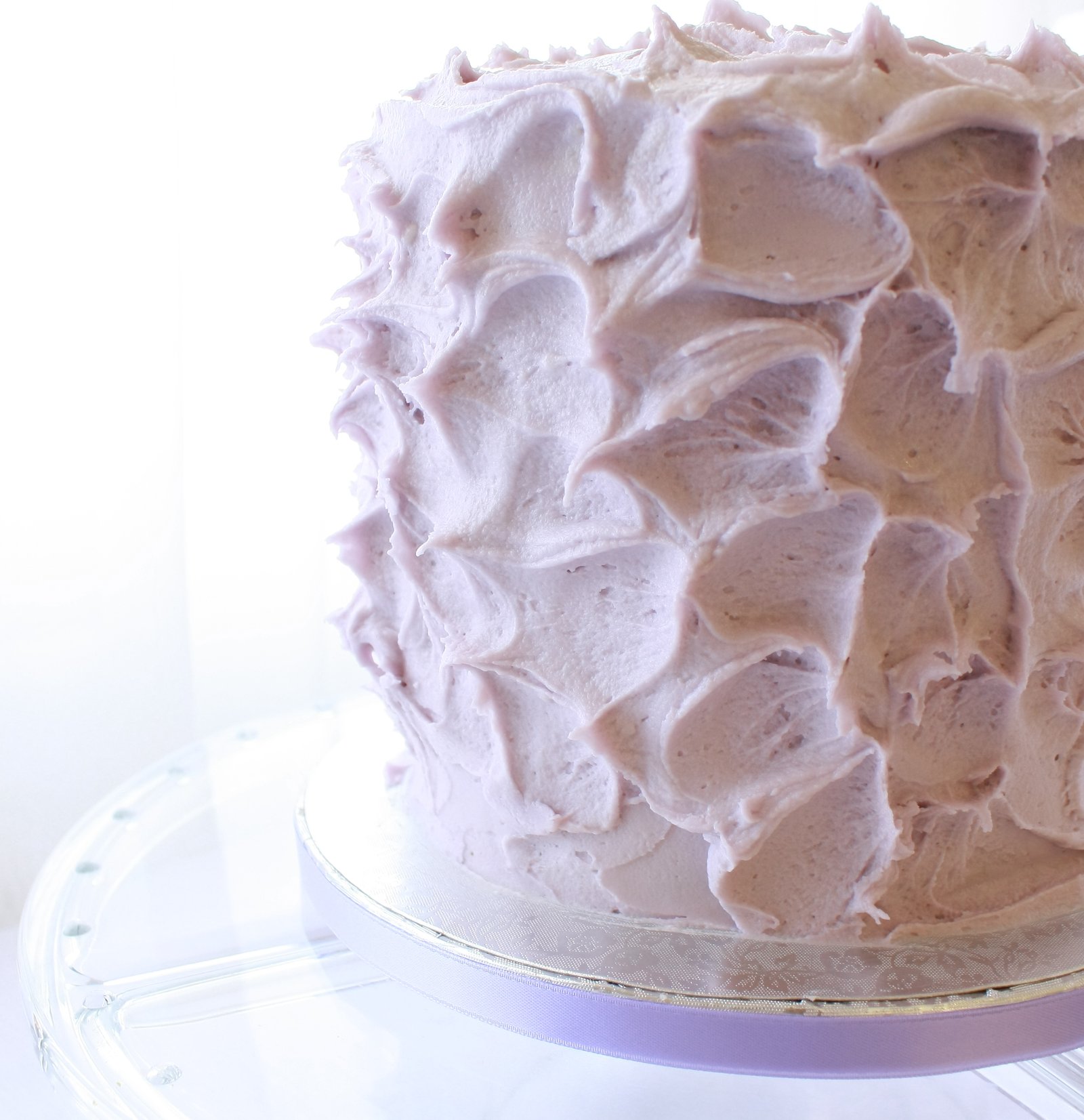
The frosting: I frosted the cake in lavender coloured vanilla buttercream. I used very little food coloring because I didn’t want the frosting to overpower the ombré layers, or to be too dominant in the whole design of the table.
I frosted the cake in 3 layers: First, I did the crumb coating, and let it sit in the fridge for 1 hour. After that, I added a thick coat, and smoothed it. I let the cake sit in the fridge for another hour and, finally, I added a 3rd thin layer of buttercream and, with the back of a teaspoon, shaped it as seen in the pictures. Very, very easy!
Would you like to bake this cake? I hope that you will and, if you do, please send me pictures!
Have a nice week!
by Marcela M. | Jun 16, 2011 | Blog, cookies, Cooking basics and tutorials, Recipe Box, Recipes, Sweets, Uncategorized
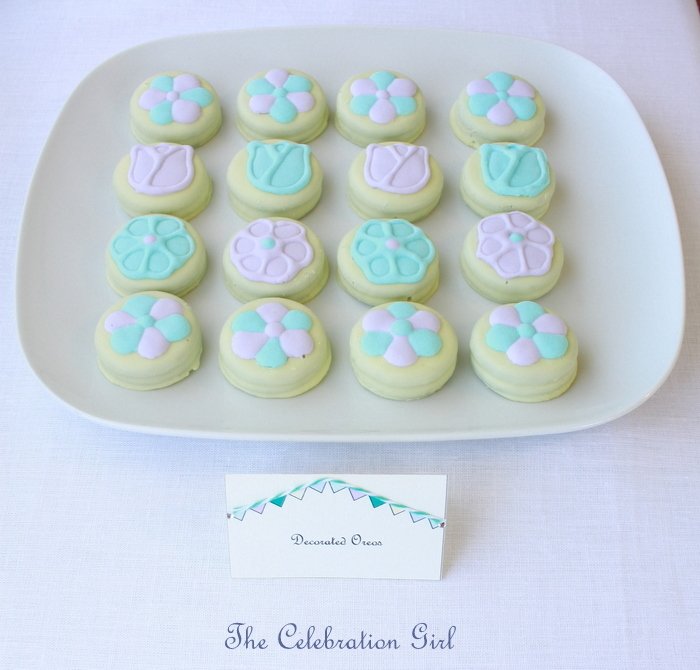
A few readers have asked me how I decorated the oreos I served for my birthday, so here goes the tutorial.
The truth is that I am not very good at drawing, nor do I own a copy cat projector, so piping elaborate designs becomes a challenge (and for me anything other than a circle falls under “elaborate”). But I really wanted to draw flowers on cookies for my birthday’s dessert table, so I had to find an easy and affordable way to do it.
The idea for these cookies occurred to me during a visit to my local baking supplies store, where I saw these Wilton Fondant Garden Shapes cut outs, and noticed that they were smaller than a normal round cookie. So I bought them and came out with the following super easy method for decorating chocolate dipped oreos (which is probably already used by somebody else too, because it is really, really simple). I did the transfer with royal icing and not with chocolate or candy melts because I must confess that I haven’t yet mastered either, but it could also be used with them too, if you prefer.
With regards to royal icing consistency, I follow Sweet Sugar Belle’s 20 second rule, because it allows me to use only one piping bag per color- as opposed to two (1 for outlining, 1 for flooding). It is also great for achieving the 3D look of the first and last row of cookies. As with most recipes, it is a matter of personal preference, this is just what works for me.
For decorating the oreos as I did you will need:
1- Chocolate dipped oreos
2- fondant cut outs/small cookie cutters of any shape you want
3- Piping bags filled with as many colors of royal icing as you wish to use in your design
4- I used number 2 piping tips, but I believe a number 3 may also work. If you want to outline the cookies with a fine line, use a number 1 tip.
Here is what I did to guide my not-really-skillfull piping:
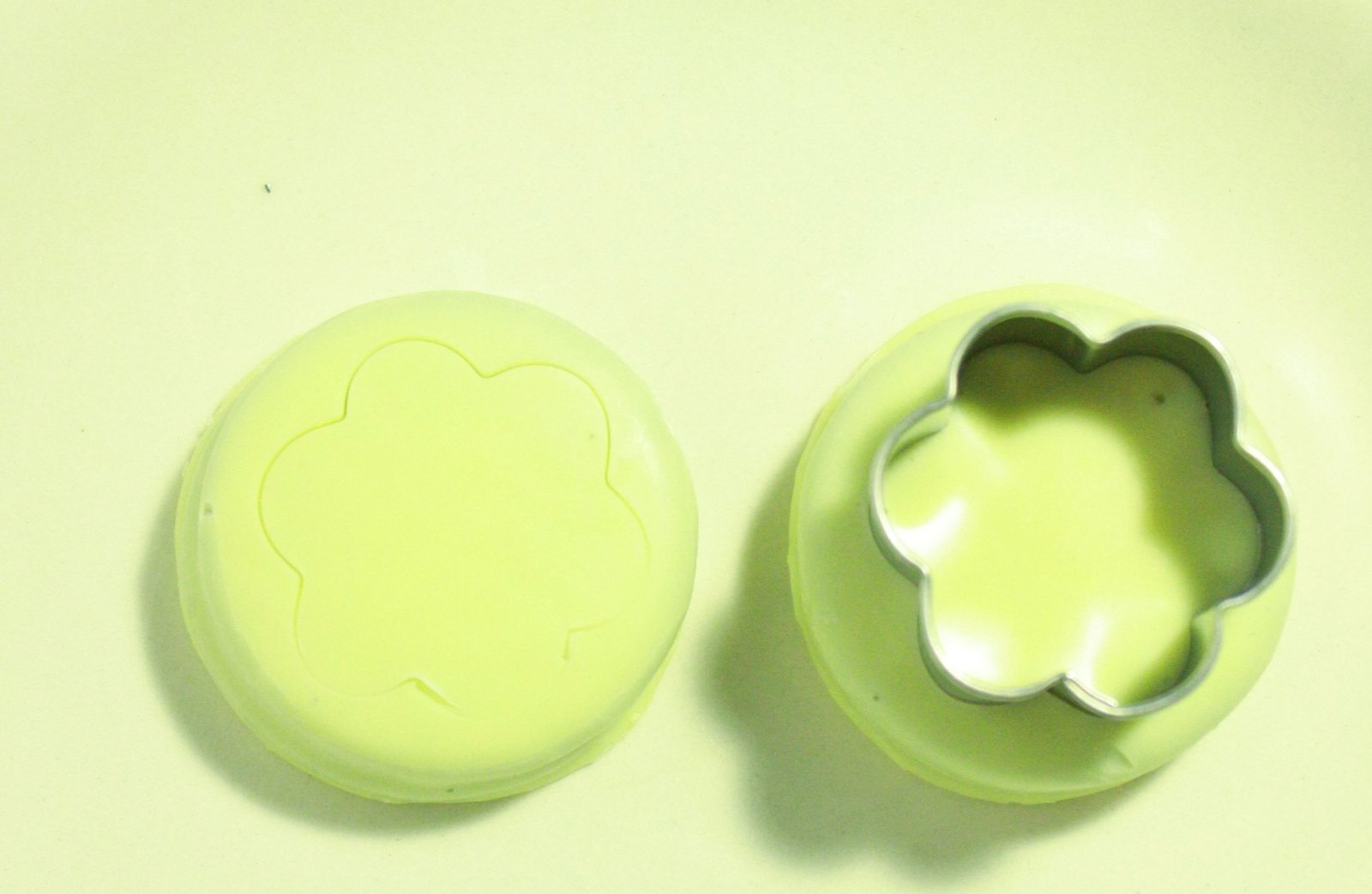
1) In the picture below you can see the chocolate dipped oreos and the fondant cutters. I used the ones I mentioned above, from Wilton, but you can use any which fits inside the shape of the cookie you want to decorate.
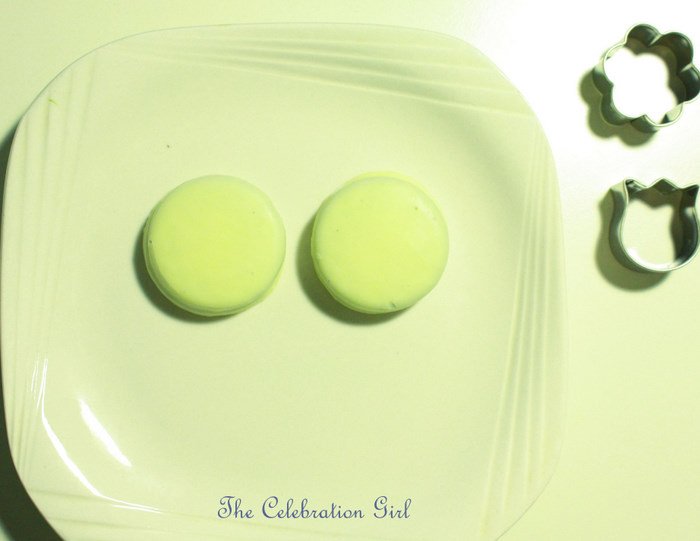
2) I pressed the cutters, firmly but softly, on top of the cookies. The pressure has to be enough so that it will leave a mark, but not that much that it will break the cookie!
Here you can see how the cutter left a shape in the cookie:
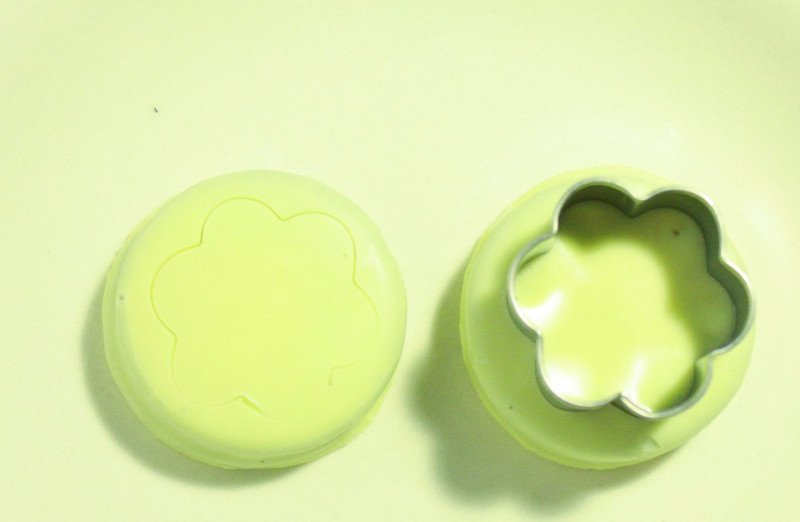
Now the method changes according to how you want to decorate your cookies.
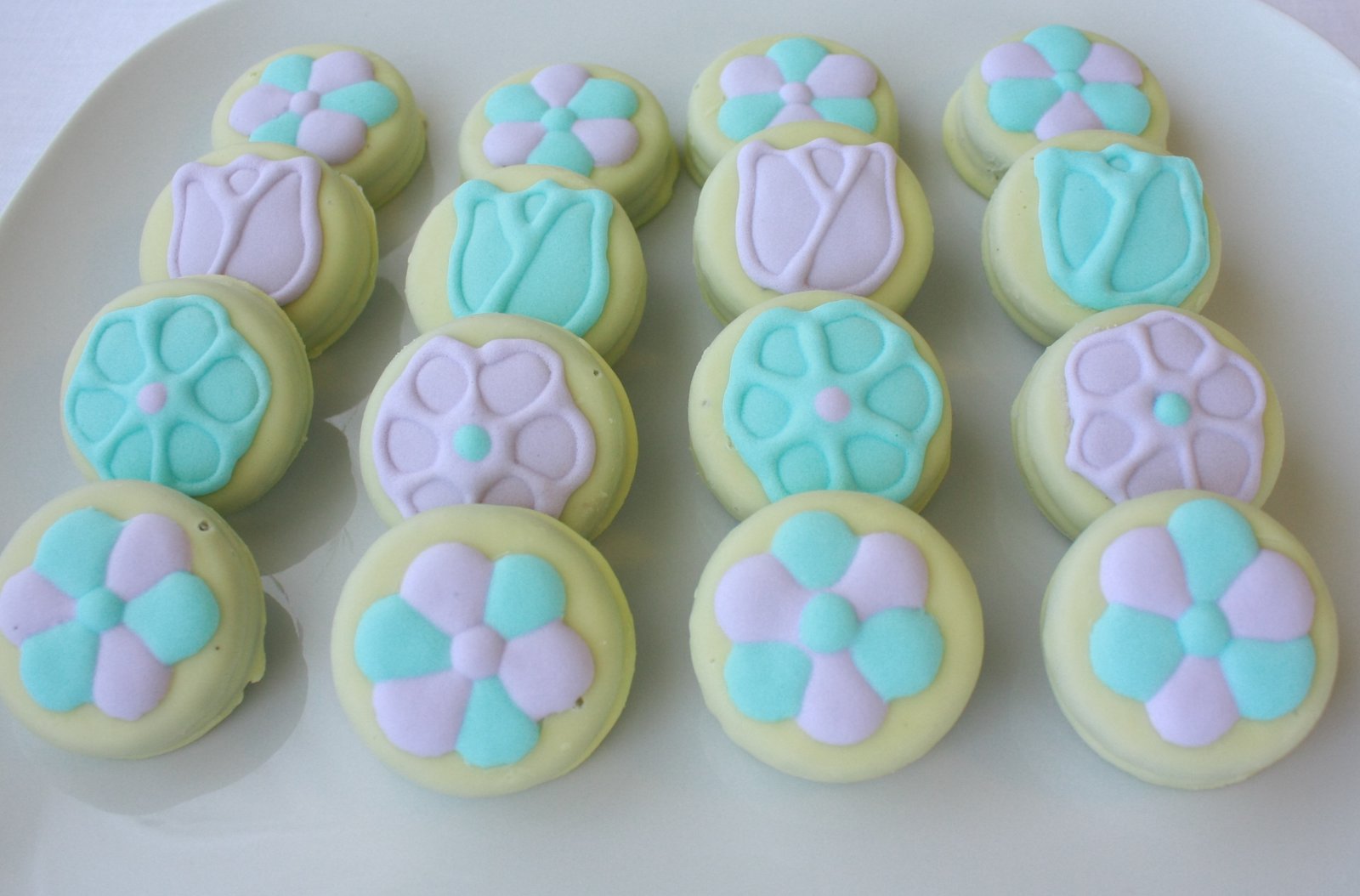
3) a- If you want to decorate them as in the 2nd and 3rd rows, follow the next steps.
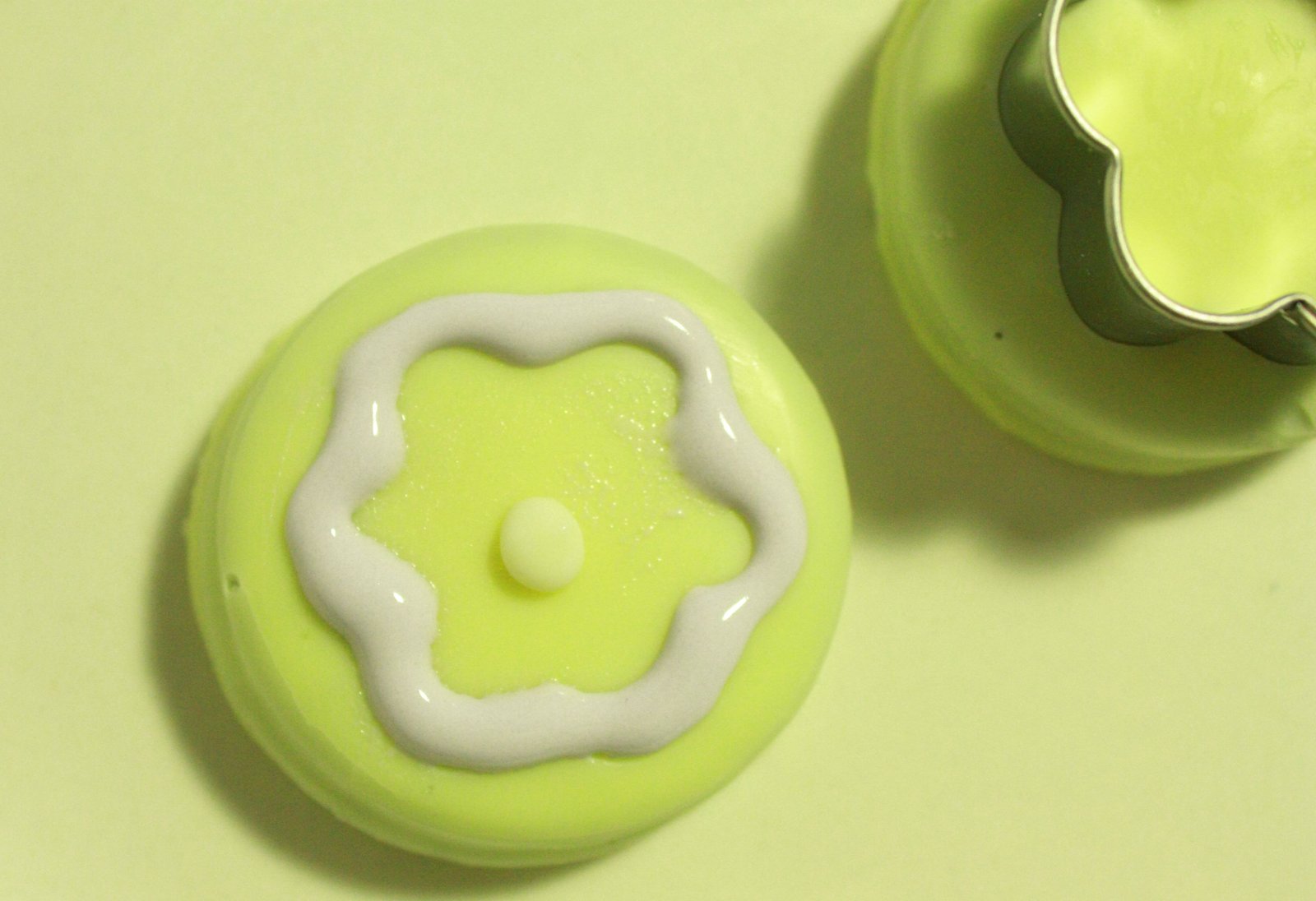
a1- Using a piping tip number 2 or 3, pipe around the shape left by the cutter. You may use a toothpick to guide the royal icing into the carving left by the cutter, and to make sure that the shape is respected:
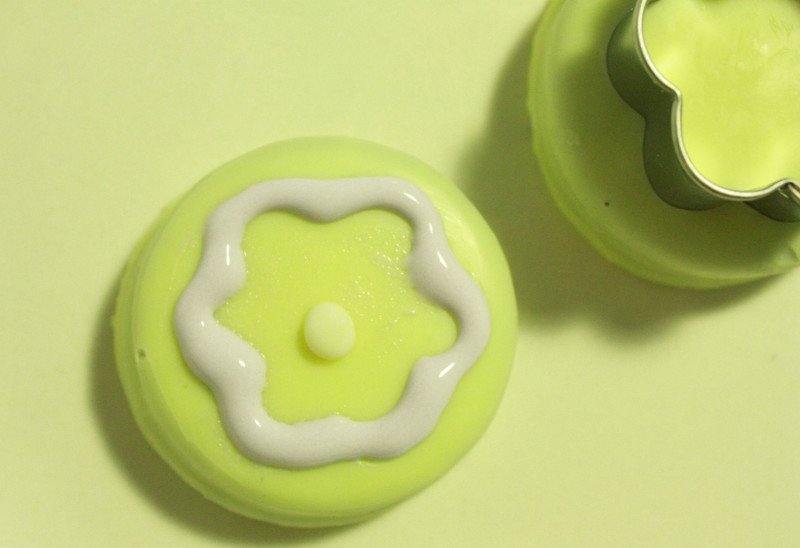
a2- Flood the inside of the cookie immediately. Pipe a dot in the middle of the daisies immediately after flooding. When you are finished they will look like this:
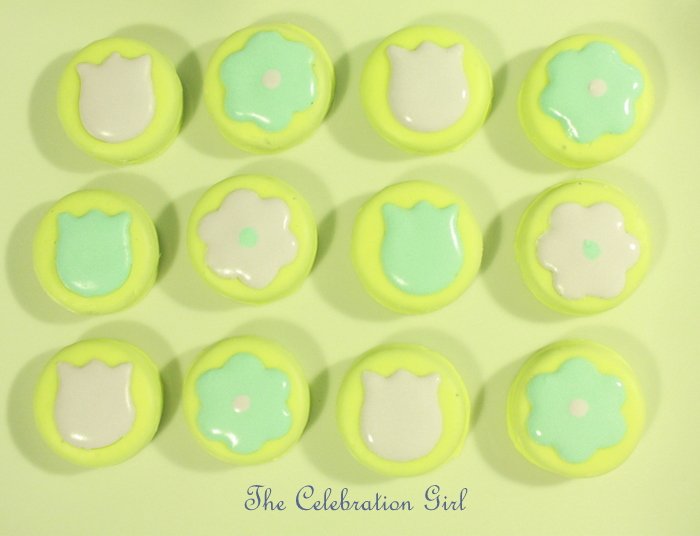
a3- Let dry for at least 2 hours. After that, outline the cookies with the same color.
3) b- If you want to give the decoration a 3D feeling (as the daisies of the 1st and 4th row), do as follows:
b1- Using a piping tip number 2/3, pipe a dot in the center of the daisies (as in the bottom right cookie). Let dry for 30 minutes.
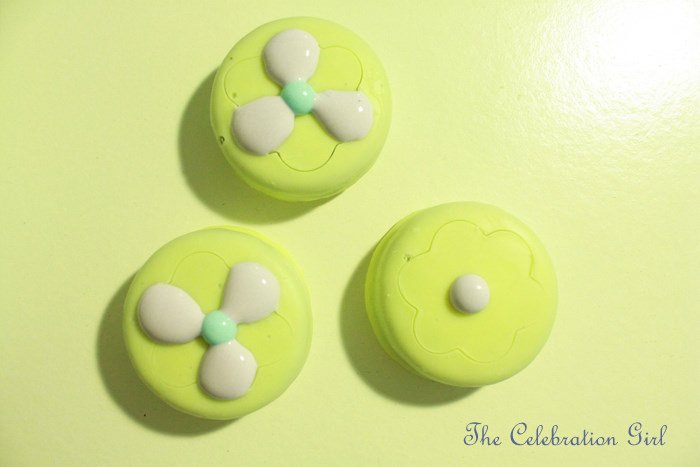
b2- Pipe half of the petals, leaving always a blank one in between , as shown above. Let dry for 30 minutes.
b3- Pipe the remaining petals. Let dry completely.
And that’s all! Easy, isn’t it?
It is very important that you allow the piping to dry for 30 minutes between each step, in order to ensure that the different colors don’t mix. If you don’t, your cookies may end up looking like this:
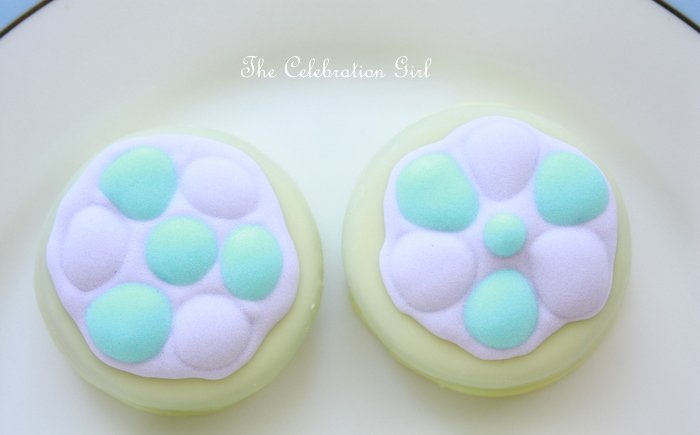
Here is another picture of the finished cookies.
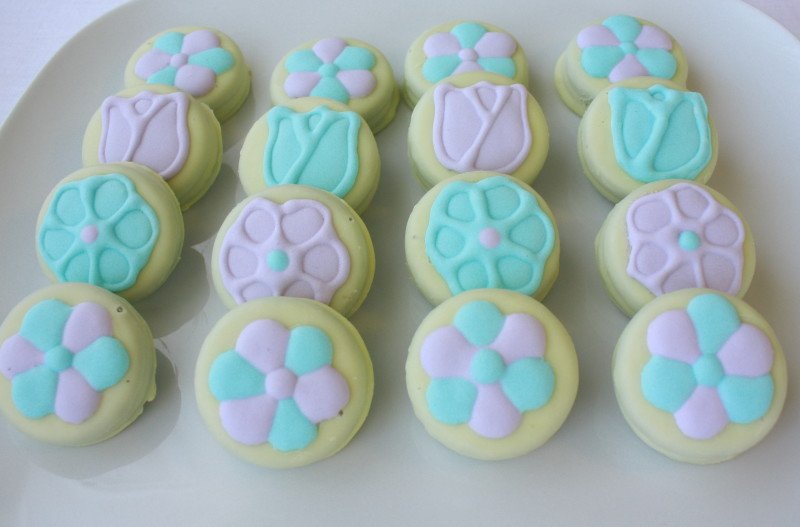
You can use this method with any shape of cutter, you can use different colors, add shimmer or disco dust, etc. There are so many possibilities and decorating cookies is so much fun!
What is your favourite method for decorating cookies?
by Marcela M. | Jun 7, 2011 | Blog, Cakes, Recipe Box, Recipes, Sweets, Uncategorized
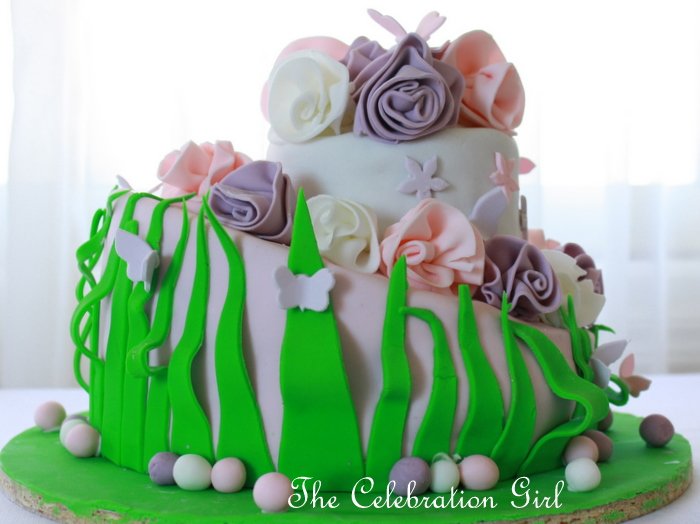
Yesterday I took a cake decorating course in a nearby city, 5 whole hours dedicated to carving and beautifying a wonky cake.
It was a wonderful experience. I really enjoy cake decorating but my sole experience with fondant had come from decorating my babies’ birthday cakes, and some cupcakes for Christmas, and whatever I knew, I had learnt watching videos on youtube or reading whatever material I could find on the internet. So I felt that I needed some kind of more formal training, a professor to whom I could ask some questions, and who could show me, hands on, how to do things. I started looking for course earlier this year and, through a facebook add (go figure!) I found Sugar Designs, the bakery where the course took place.
We were five students, and a teacher, which was a nice number. Everything was prepared for us to start working and laid out nicely on the working space. We were taught how to carve a cake to give it a wonky shape, how to smooth it with buttercream to make sure that all edges were sharp and that the surface was ready for fondant, how to cover a cake drum and a cake, how to insert cake dowels and how to stack the upper tier of a wonky cake, as well as how to make butterflies and roses out of modelling paste, and little fondant balls and green grass. All these techniques would of course require a lot of practice to master them, but I am quite happy with the result, being the first time I tried them!
If you enjoy cake decorating, I would encourage you to take a course. It is great fun and the techniques one learns can be applied to so many other cake creations!
Here are some other pictures of the cake I made:
There were flowers…
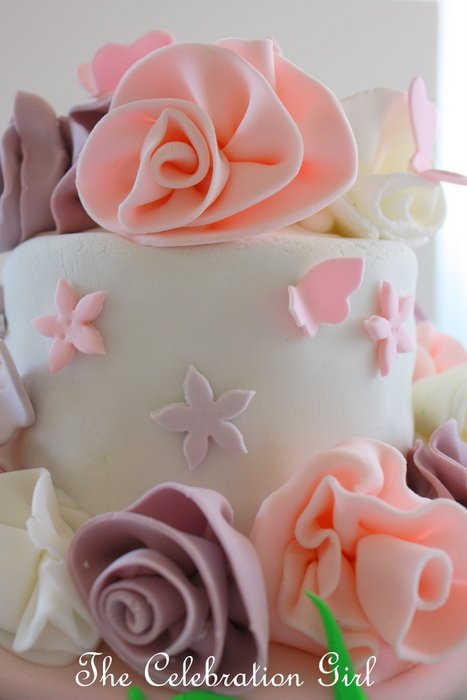
…and butterflies…
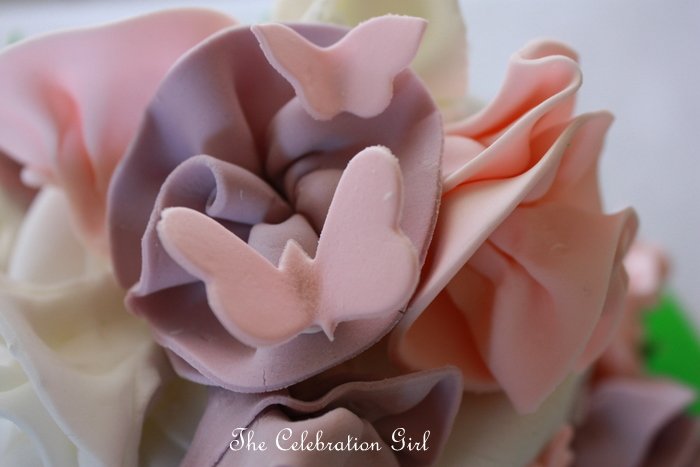
…and roses…
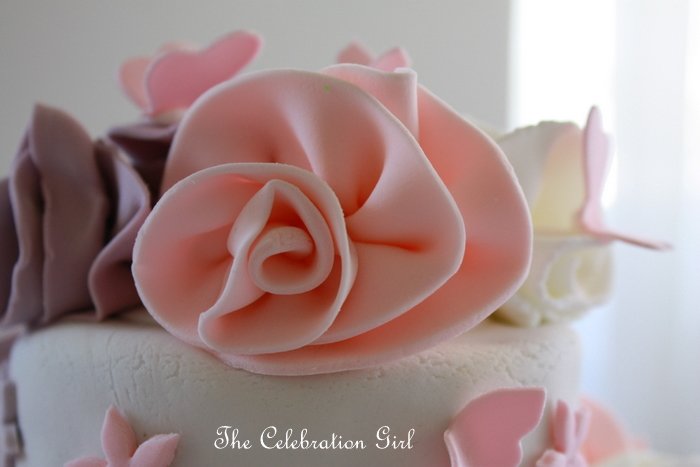
…and green grass…

This is a view of the lower tier:
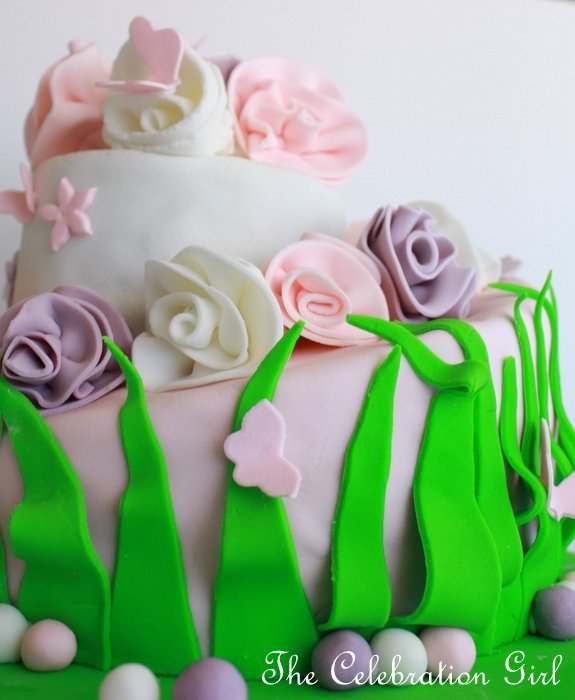
Here is a view of the upper tier:
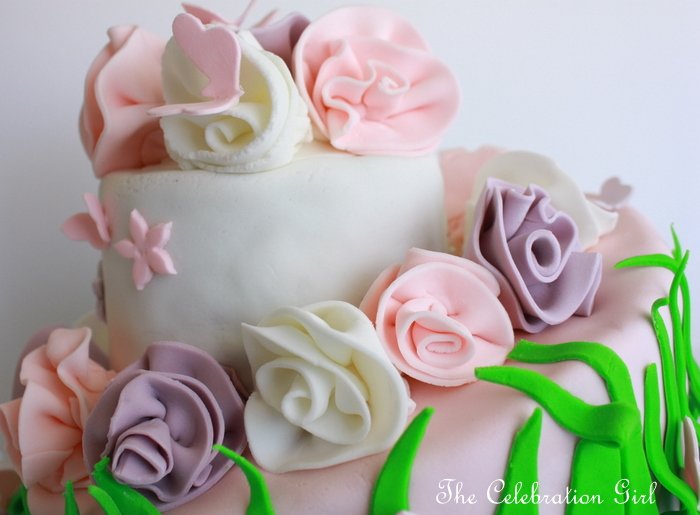
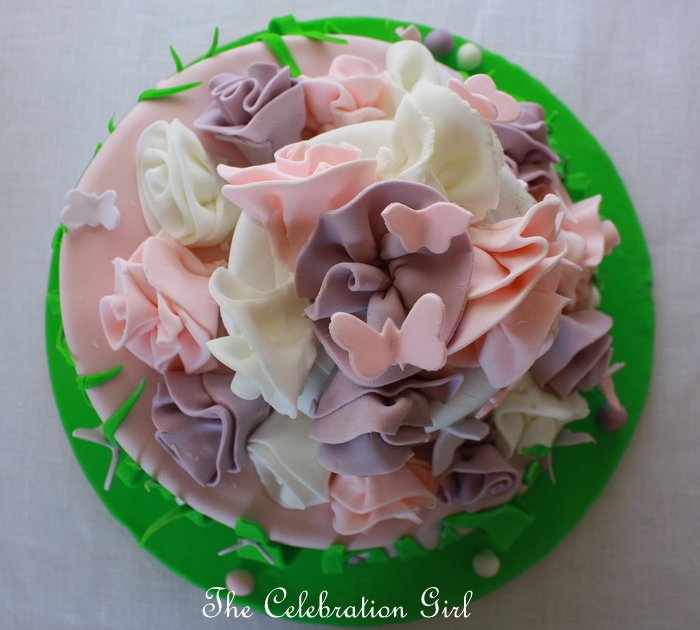
And here are some other views of it, from the back, from the sides and from above:

Did you ever take a cake decorating or other baking course? Would you like to?
Have a nice week!
by Marcela M. | May 31, 2011 | Blog, cupcakes, Recipe Box, Recipes, Sweets
Hello everyone!
Today’s post is proof that something good can come of something bad. Don’t worry, I don’t mean to get too philosophical here, it’s just that, when it comes to cooking, I have always found that the biggest failures many times lead to interesting discoveries.
These cupcakes were not intended to be cupcakes at all. They were intended to be a frosting: Swiss Meringue Buttercream frosting, with which I intended to cover a cake with lots and lots and lots of ruffles. I wanted to make a cake like this one, from fantastic baker Sweetapolita, which I have been drooling over for some time already. And in order to achieve a cake like that, I first needed to be able to make the required frosting.
Swiss Meringue Buttercream is composed of egg whites, caster sugar (beaten into a swiss meringue) and butter. The addition of egg whites and the additional beating makes it much softer, subtle and luscious than regular buttercream, which is composed of just butter (or margarine/shortening for vegan varieties) and powdered sugar and is, therefore, quite heavy. Don’t get me wrong, regular buttercream tastes well, but I don’t think I could eat a ruffle cake with regular buttercream frosting-there would just be too much buttercream in it.
So I prepared everything to make Swiss Meringue buttercream, read carefully Sweetapolita’s instructions (which are GREAT) and saw this wonderful video. I had everything, except one thing: a stand-mixer. I had read that it was not possible to make this frosting with a hand mixer, but I was willing to try to make it with the appropriate attachments of my Moulinex Master Chef food processor.
I followed the instructions in the video to the letter: I separated egg whites from egg yolks with looots of care, put the former in a bowl beating them slightly, brought the bowl on top of a simmering pot being careful that it didn’t touch the water, and added the sugar, beating for about 5 minutes until the sugar granules were completely dissolved.
I then put the mixture in my food processor, equipped with the whisk attachment, and started beating at fast speed until I got stiff peaks. It took me about 15 minutes to get to this point and for the bowl to be at room temperature again. At that time, I changed to the mixing attachment and started adding butter (which I had previously cut ) one little square at a time. At first everything seemed ok. The texture of the meringue turned grainy and then it changed to soupy…but despite beating and beating and beating it never evolved as it was supposed to, it never achieved proper consistency. It never stopped being…well, like soup.
At first, I blamed the warm weather and put the bowl in the fridge for 15 minutes.
It didn’t work.
Then I thought that maybe my butter had been too soft when I put it in the meringue. So I followed the advice I had read and added just a little bit more (colder) butter.
Nothing happened.My very buttery-used-to-be-meringue remained too loose to frost anything.
When I realized that I had been beating for over 30 minutes after adding the first butter square, I decided it was time to stop and accept the fact that there was no way that batter was going to become anything remotely like swiss meringue buttercream. Or at least no way I knew of.
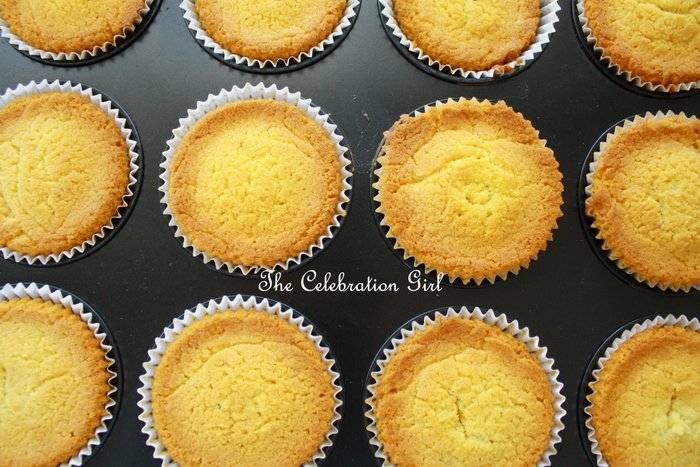
The question was: what to do with it? As a matter of principle I don’t throw food, so it was time to take a good look at the batter and uncover its potential. I tasted it and it was delicious ( I could feel how great it would have tasted as frosting!). So I decided to transform it into cupcakes. Worst case scenario, if the cupcakes ended up looking awful, I could always crumble them and make cake-pops!
So I added two cups of self-raising flour (the only one I had at home at the moment), 1 teaspoon of baking powder, 1 teaspoon vanilla extract and, at the last minute, I also added 2 heaping tablespoons of cornstarch, which I thought would help make the cupcakes lighter – and it did. The mixture was enough to fill 12 cases. I used muffin cases because I wasn’t sure how the batter was going to react in the oven and I didn’t want it to overflow. I preheated the oven for about 5 minutes only, at 150 C, and cooked them until golden, for about 15 minutes.
This is how they looked straight out of the oven:
Goodbye Swiss Meringue Buttercream, Hello cupcake!
I let them cool completely and decided that, instead of frosting, I was just going to serve them with some powdered sugar sprinkled on top (1/2 a teaspoon for each cupcake).
And then it was time for the final frontier: the taste test. Because, as good as they looked, the important thing was whether they were actually good to eat.
And they were! They tasted very well, actually!
They were very moist, soft and buttery – but not too buttery.
Here is how they looked on the inside:
Do you want a bite?
Here’s the recipe:
Ingredients:
From Dyann Bake’s recipe for Swiss Meringue Buttercream:
– 1/2 cup egg whites (I used 3 XL)
– 1 cup granulated sugar
– 12 oz (3 sticks/350 gr) butter
– a pinch of salt
Added by me:
– 2 cups self-rasing flour
– 1 teaspoon baking powder
– 2 heaping tablespoons cornstarch
– 1 tablespoon vanilla extract
– 6 teaspoons powdered sugar (to serve)
Instructions:
1- Separate egg whites from egg yolks. Cut the butter into little squares and set aside on a plate, outside of the fridge.
2- Put egg whites in a heat-resistant bowl, add salt, beat slightly and place over simmering water. Add sugar and continue beating until the sugar completely dissolves (when you can no longer feel the granules at the touch).
2- Once the sugar is completely dissolved, start beating with the whisk attachment of a mixer-or by hand if you are very strong! Continue beating until reaching stiff peaks and the bowl’s temperature has completely cooled down and is back at room temperature (otherwise the butter will melt when added).
3- Start adding butter, one little square at a time, until the batter is smooth but still liquid. If you are the proud owner of a stand-mixer, stop after this point or you may actually end up making swiss meringue buttercream! 😉
4- Add vanilla and mix until combined.
5- Mix the dry ingredients in a separate bowl. Add them to the egg and butter mixture, little by little, and mix until well combined.
6- Divide the batter between the muffin cases, putting just enough to fill about 3/4 of each of them.
7- Pre-heat the oven to 150C (302F). Place the muffin pan into the oven and bake for about 15 minutes or until golden.
8- Let cool, sprinkle powdered sugar (or other frosting) on top, and serve.
Moral of the story: If life gives you failed swiss meringue buttercream, add flour and make cupcakes!
Have you ever come up with a good recipe when trying to make something different?
——————————————
El rinconcito Latino:
Aquí está la receta en castellano:
Ingredientes:
De la receta de Dyann Bakes para Swiss Meringue Buttercream:
– 1/2 taza de claras de huevo ( yo usé 3 de huevos XL)
– 1 taza de azucar
– 350 gramos de manteca
– 1 pizca de sal
Agregados por mí:
– 2 tazas de harina leudante
– 1 cucharada de té de polvo de hornear
– 2 cucharadas soperas de maizena
– 1 cucharada sopera de escencia de vainilla
– 6 cucharadas de té de azucar impalpable (para decorar)
Instrucciones:
Inicialmente, procedan como si fueran a hacer swiss meringue buttercream, o sea:
1- Separen claras de yemas y coloquen las claras en un recipiente que resista el calor. Saquen la manteca de la heladera y cortenla en cuadraditos. Dejen los cuadraditos en un plato afuera de la heladera.
2- Coloquen agua en una olla (poca) y lleven a fuego muy lento hasta que hierva. Agreguen la sal a las claras, batan ligeramente, y coloquen el recipiente sobre la olla , batiendo siempre. Agreguen el azucar y sigan batiendo (para evitar que las claras se cocinen) hasta que el azucar se disuelva totalmente (cuando al colocar un poco de la mezcla entre el índice y el pulgar no se sientan más los gránulos de azucar)
3- Lleven la mezcla a una batidora/procesadora, o continuen batiendo a mano hasta que se formen picos firmes y el bowl no esté más caliente al tacto. La mezcla debe volver a estar a temperatura ambiente porque, de lo contrario, la manteca se derretirá al incorporarla.
4- Incorporen la manteca de a un cuadradito por vez, batiendo bien luego de cada adición hasta que la mezcla esté uniforme y lisa pero aún líquida. O sea, si tienen batidora tipo Kitchen Aid, dejen de batir al llegar a este momento o puede que logren hacer swiss meringue buttercream! 😉
5- Agreguen la vainilla y mezclen hasta que esté incorporada.
6- Mezclen los ingredientes secos en un bowl aparte. Incorporenlos de a poco al batido de huevos y manteca, mezclando hasta que estén bien incorporados.
7- Dividan la mezcla en pirotines para muffins, llenandolos sólo 3/4 de la capacidad total.
8- Pre calienten el horno a 150C por 5 minutos. Lleven las cupcakes a horno por aproximadamente 15 minutos, o hasta que estén doradas.
9- Dejen enfriar, espolvoreen con azucar impalpable (u otra cobertura) y sirvan!