by Marcela M. | Jul 5, 2011 | Blog, cookies, Crafts and DIY, Recipe Box, Recipes, South America, Sweets, Travel, Uncategorized
Good morning friends!
How was your weekend? I hope you had a great time!
July is a month full of celebrations in my home country, Argentina, and it all starts during the first week of the month: From 1st until 7th of July, Argentina celebrates “Sweetness week”. During this week, argentinians exchange a sweet (chocolate, candy, etc) for a kiss.
The tradition originated as part of a promotion campaign to increase the sale of sweets, especially of ARCOR’s bon-o-bon, but it was quickly embraced by the population. Sweetness week is now a time, not only to give away chocolates and candies, but also to be nice to those around us.
Would you like to join in the celebrations, wherever you are?
If you do, Delicious Tea has some adorable free printables that can be printed on sticker paper and attached to individual sweets, or printed on cardboard paper and attached to a gift box. If you would like to use them, all you have to do is “like” their facebook page, “like” their album, leave your email address in the comment below the pictures, and they will send them to you!

If you also want to offer your loved ones some traditionally argentinian home-made sweets, here is my recipe for alfajores de maizena, or conrstarch cookies (which are the ones you can see in the picture at the beginning of this post):
Ingredients:
For the cookies:
800 grs cornstarch
300 grs all-purpose flour
350 grs sugar
3 teaspoons baking powder
4 eggs + 3 egg yolks
1 tablespoon vanilla extract
1/2 kg butter
For the filling:
Dulce de leche
Shredded coconut
Preparation:
1-Mix butter and sugar until creamy.
2- Add eggs, egg yolks and vanilla. Mix well, but not too much- just until all ingredients are incorporated.
3- In a different bowl, mix the dry ingredients.
4- Gradually add the dry ingredients to the butter mixture. Mix thoroughly until you have a workable dough (it should have the texture, more or less, of a pâte sablée)
5- Roll the dough on a floured surface and cut with a round cookie cutter, about 1/2 cm thick.
6- Place on a baking tray covered with baking paper or greased, and put in the oven at 150º C/305 F for about 10 minutes.
Very important: the cookies SHOULD NOT get brown or they will be hard and crumby. Watch them very carefully while they are cooking!
7- Once they are cooked, remove from the oven and let them cool for half an hour.
Assembly:
1- Put shredded coconut in a bowl.
2- Put a layer of dulce de leche on the inside of one cookie, and then place another cookie on top (like a dulce de leche sandwich).
3- Put dulce de leche on the sides of the cookie sandwich with a spatula/knife, and then roll it in shredded coconut (the coconut will then attach to the sides of the cookie).
NOTE: The recipe above is for traditional alfajores de maizena. You can see a picture of wonderfully executed ones, made by Amy,The Sugar Fairy (using this recipe) here. The ones I made for my birthday were coloured to match my dessert table, and filled with buttercream and lemon curd, instead of dulce de leche. This is the beauty of these cookies: they are easy to make and very versatile! If you want to colour the dough, just add a few drops of food colouring at the end of the preparation. This dough can be stored in the freezer.
Have a wonderful Tuesday!
by Marcela M. | Jun 30, 2011 | Blog, cookies, Crafts and DIY, Recipe Box, Recipes, Sweets, Uncategorized
Hello there!
This post was supposed to be published yesterday evening but my internet connection was up and down, so it is only now that I can do it.
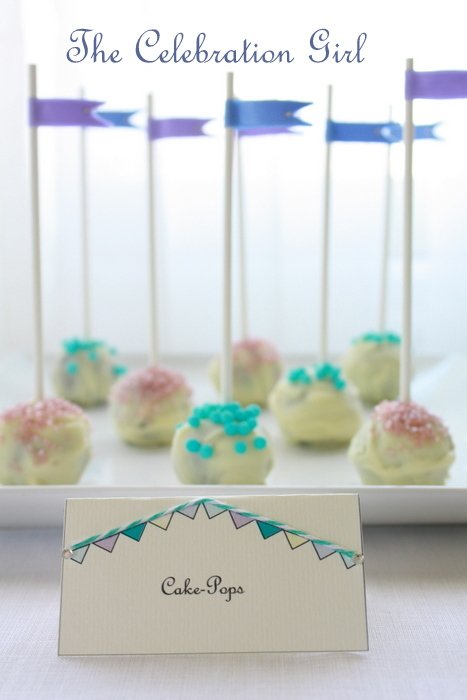
I am writing this post because, while cake-pops have been widely popular in the US for quite some time already, they are a novelty in other parts of the world (namely, Cyprus and Argentina!). Consequently, a few readers and friends have asked me after seeing my pictures, what they are and how they are done. And when I have referred them to other websites, they have asked me what candy melts are, whether there are alternatives to them, because they are hard to get, or they do not exist where they live.
Basically, cake-pops are cake, mixed with frosting, covered in chocolate. The procedure for making them is fairly easy: 1- bake a cake 2- let the cake cool for 24 hours 3- crumble the cake 4- Mix with frosting 5- shape the cake-balls 6- attach lollipop stick 7- Dip the cake balls into candy melts/chocolate 8- Add sprinkles or any other decoration. There are also other versions that work with cookies instead of crumbled cake…but technically speaking those would be cookie-pops* 😉
They look simple, right? However, they are not always that simple. In my experience, two things need to be taken into consideration:
1) The mixture of crumbled cake and frosting should not be too moist or the cake-pops will not remain attached to the lollipop stick, they will fall (Argentinian friends: this is why I find that dulce de leche doesn’t work, and that buttercream is better. You may try, but I warned you ;). Therefore, when you start adding frosting after crumbling the cake, it is better to do it little by little and to test consistency. You want to add just enough frosting to be able to shape the balls, not more. After the balls are shaped, keep them in the freezer for 15/20 minutes. If you don’t own a freezer, keep them in the fridge for several hours.
2) The consistency of the candy melts/chocolate is key to achieve a smooth finish. The problem is that candy melts are not always easy to work with, because they harden much faster than regular chocolate. I do not own a microwave, so I melt them in a double boiler and, when they are starting to melt, I take the bowl out of the stove, and start beating the candy melts until they are liquid enough to dip the cake-pops in them. Also, the more candy melts you use the better, because, in order to get a smooth finish, you need to completely submerge the cake-balls in them.
For a very helpful, full of photographs tutorial of Bakerella herself making cake-balls and cake-pops, check these Instructions on how to make cake-pops from The Pioneer Woman’s blog. And check Bakerella’s blog to see and assortment of wonderfully creative ideas on how to make these sweets that drive children crazy at parties!
Two more tips:
1) When I don’t want to make a lot of cake-pops, I bake cupcakes instead of a cake, crumble as many as I need, and freeze the rest. Or I prepare all cake-balls and freeze the ones I don’t need in an airtight container (without dipping them in chocolate).
2) If you cannot find candy melts where you live, you can use chocolate for making truffles or for frosting cakes , which hardens faster (in Spanish: chocolate cobertura). This is necessary for the cake-pops not to drip all chocolate covering down the lollipop stick when you turn them after dipping.
An easy way of decorating the lollipop sticks is with ribbon flags. The ones above are the ones I made for my birthday party and, as you will see, they are really easy.
In order to make them you will need:
1) Ribbon
2) Lollipop sticks
3) glue
4) A pair of scissors
5) self-adhesive scrapbooking gems
6) Tweezers
Here is how to do it:
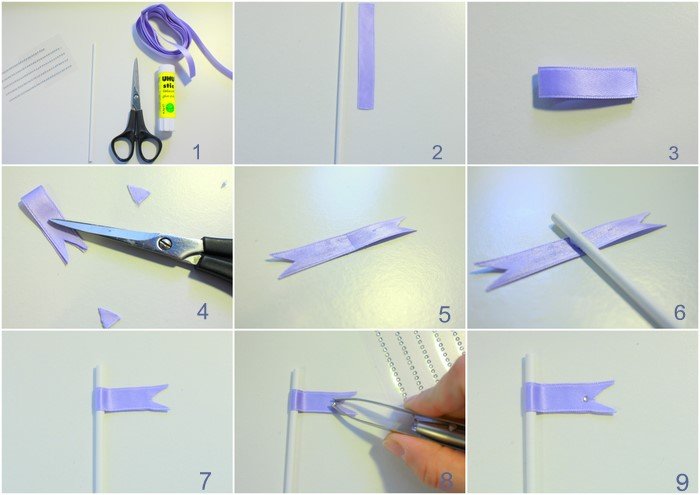
1- Cut ribbon, approximately half the size of the lollipop stick you will be using for your cake pops.
2- Fold the ribbon in half
3- Cut a triangle with your scissors and detach it, as in picture 4 above
4- Open the ribbon and put glue generously in it
5- Place the lollipop stick in the middle of the ribbon flag
6- Fold the flag, leaving the stick in the middle and press both sides against each other for a few seconds so that they are properly glued together
7- With the help of tweezers, take one self-adhesive gem and place it on the flag, as shown in picture 8.
8- Press the gem against the flag for a few seconds so that it is well attached. Picture 9 shows how it will look after it is finished.
And here are all the ones I made, ready for their cake-pops.
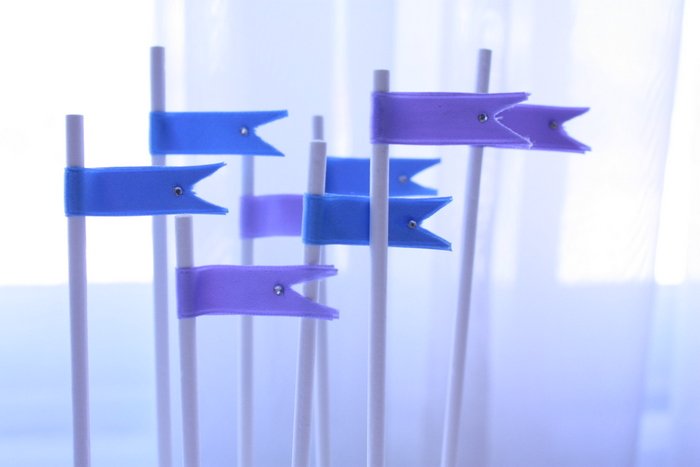
It is almost as if they were saying “We want cake-pops! We want cake-pops!“, isn’t it? 😉
Have you made cake-pops before? Do you have any tips and tricks to share with other readers? If you do, please leave a comment!
Have a wonderful weekend!
*If you want to make cookie pops, you can find recipes, tips and tricks here (in English), and here (in Spanish)
by Marcela M. | Jun 29, 2011 | Blog, Cooking basics and tutorials, cupcakes, Recipe Box, Recipes, Sweets, Uncategorized
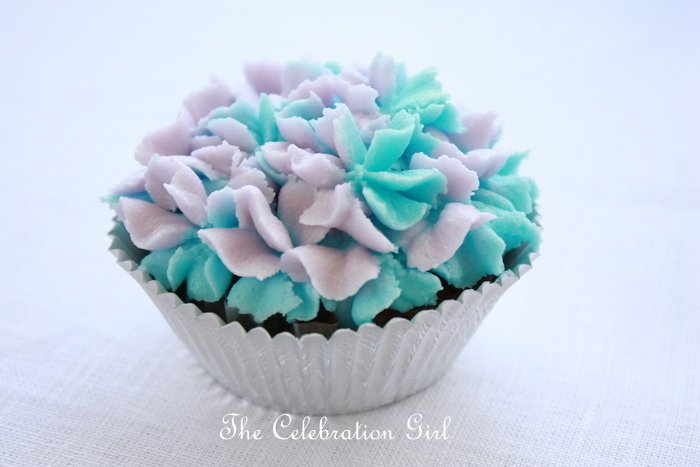
Hello there!
This blog is one month old today, so we’ll celebrate with a double post! In this one I’ll reveal the secret to my birthday’s flowery cupcakes and in the next one we’ll talk cake-pops.
The secret is…that there is no secret 😉 My flowery cupcakes were inspired by Glory Albin’s fabulous hydrangea cupcakes. I saw them in her blog, Glorious Treats, long ago, but the right occasion for making them never seemed to appear. Until my last birthday! And I will definitely be making them again.
My cupcakes were chocolate ones, as Glory’s, but I did not follow her recipe. I used, instead, one of the recipes that Bakerella shares in her book . This is a recipe my children LOVE, so if you have the book, I recommend it*. But if you don’t have the book, your favorite chocolate cupcake recipe will do. You could also try this one or this one (which Bakerella says adapts very well to cupcakes, without the frosting), which are delicious as well.
For the frosting, I used regular vegan buttercream, from the same batch I used for frosting my birthday cake.
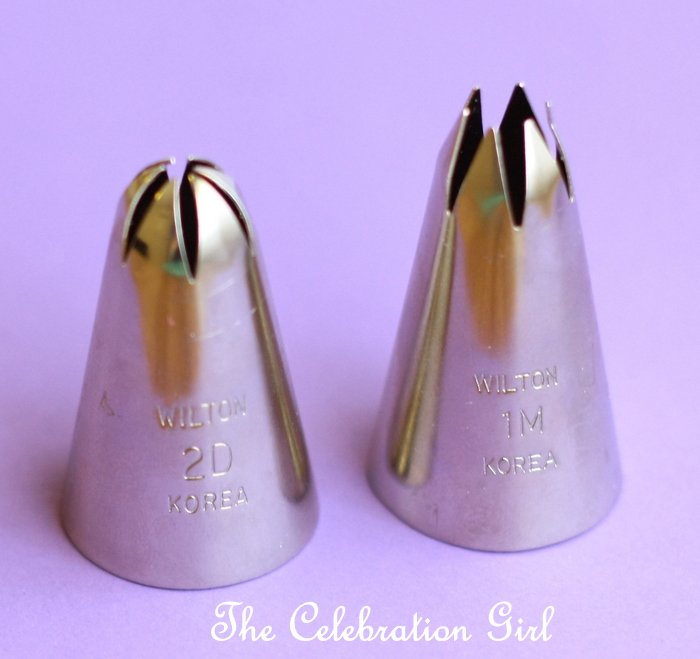
How did I make those flowers? With the help of my trustworthy friend, Wilton’s 2D tip:
I divided the frosting in two, coloured each batch, put both colours side by side in the piping bag and then I simply piped the flowers. In order to see a VERY clear tutorial on how to do it, including pictures, check Glory’s blog here. Actually you should go visit her blog anyway because her confections, dessert tables and crafting ideas are truly amazing!
So there you have it: the secret to beautiful and easy hydrangea cupcakes!
I’ll see you later today with a post on cake-pops! Have a nice morning!
Note: There is a Dutch and a Brazilian version of Bakerella’s book “Cake Pops”. So one in Spanish may be on its way too!
by Marcela M. | Jun 27, 2011 | Blog, cookies, Cooking basics and tutorials, Recipe Box, Recipes, Sweets
Hello dear friends! How was your weekend? Are you ready to start a new week?
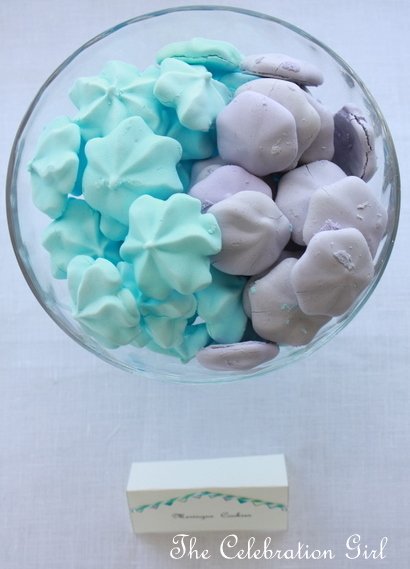
A few readers have asked me for the recipe of the meringue cookies I served at my birthday party, so here is all the information and a few tips.
The recipe I used for the cookies is The TomKat Studio‘s Susie’s Forgotten Meringue Recipe. I have been following Kim’s blog for a long time and I bookmarked this recipe the minute I saw it. In Argentina we call them “merenguitos” but the cookies from this recipe are softer and chewier than them. They just melt in your mouth!So if you want to do them, just click on the link above and follow the recipe (and after you do that, take a look and Kim’s beautiful creations, they are amazing!).
Before starting, make sure the bowl and all utensils you will use are very clean. In order to make sure they are spotless I spray a little bit of lemon juice in them and then wipe it out using a paper towel (a trick I learnt from Sweetapolita)
I am adding below a few tips for those who -like me- don’t own a stand mixer, and I hope you will find them useful if that is your case.
As I mentioned above, I do not own a Kitchen Aid or any other stand mixer*, so making some recipes becomes a challenge. What I do own is a Moulinex Masterchef 8000 food processor, which comes with a whisk attachment:
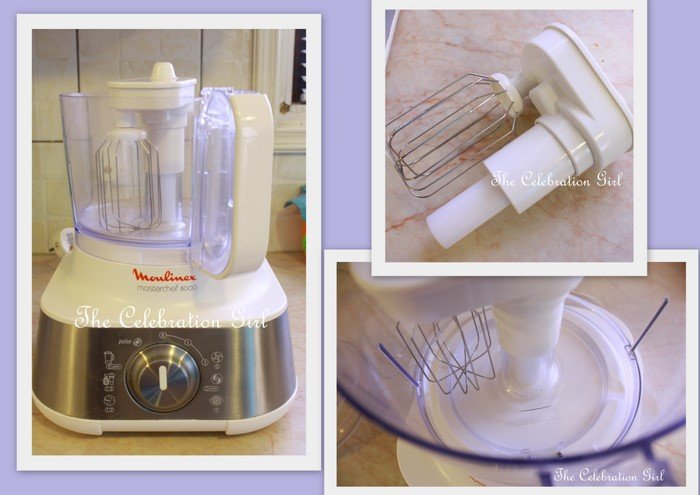
This type of machines have their limitations, and they are generally unable to reach really hard meringue peaks, or they leave a part of the batter unmixed (the one between the bottom of the bowl and the whisk). But they are still very useful (and definitelly better than beating by hand!).
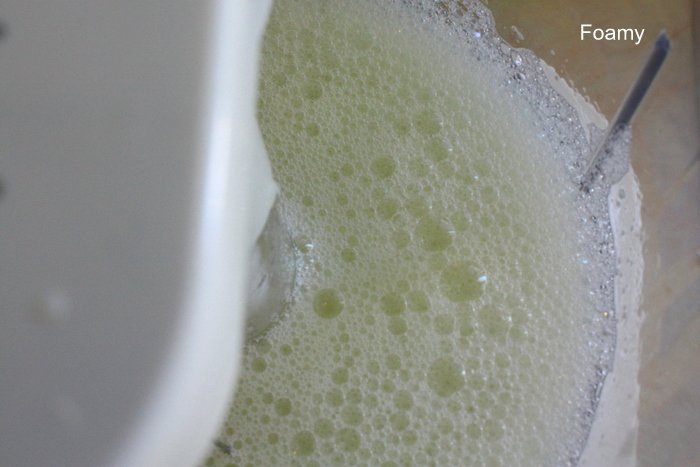
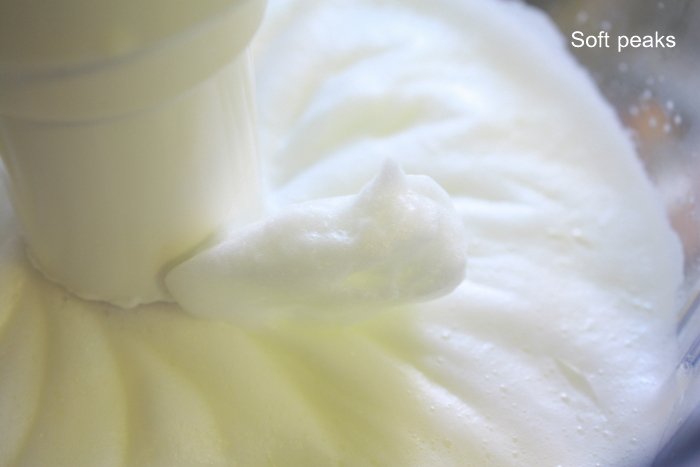
What I will show you is the consistencies I worked with for making these meringue cookies. I am doing this because I know how frustrating it can be to watch pictures of preparations done with stand mixers, not being able to achieve such consistencies and not knowing whether the ones we can actually achieve are enough for the recipe.
The recipe mentions 3 different consistencies:
1) Foamy: When your egg whites look as below, add cream of tartar and salt.
2) Soft peaks: When your egg whites look as below, start adding sugar:
3) Hard peaks: Continue beating until your meringue looks at least as in the picture below.The meringue has to be the harder consistency you can reach in order for the cookies to hold their shape (especially if you want a cute star shape), otherwise they won’t.
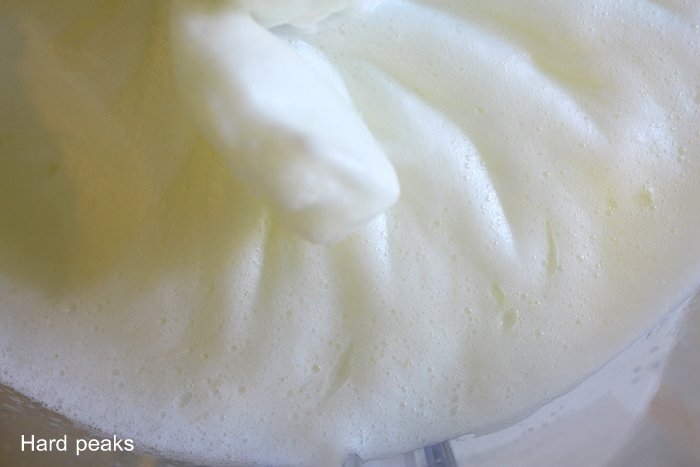
This is not the ideal consistency (which is harder) but is all my processor will achieve (after a good 15/20 minutes of beating at maximum speed) and enough to make these cookies. In order to make sure that they do hold their shape, it is a good idea to keep the meringue in the fridge (in a bowl covered with foil) for about 15 minutes, before putting it in the piping bag.
After your meringue is ready, just add colouring and put it into piping bags. For the cookies I made, I used a 2D and a 1M piping tip, for the aqua and lavender cookies, respectively. As you can see from the picture below, the 2D is a closed star tip and the 1M an open star tip. The cookies I piped with the 2D tip held their shape better than the ones I piped with the 1M tip.
Here is how the tips look from above, in case piping tips are classified in a different way where you live:
After you have piped all cookies, simply put them in the oven, following the recipe’s instructions. After they are ready, let them rest in the oven for several hours.
Here is a picture of my aqua cookies the day after I made them:
And this is all! They are cheap, easy to make, delicious to eat and look really pretty at a dessert table! Thank you Susie and Kim for sharing this recipe!
Will you make them?
* Kitchen Aid stand mixers are very expensive outside of the US (560 euros in Cyprus for example)
by Marcela M. | Jun 24, 2011 | Blog, Crafts and DIY, Uncategorized
Hello everyone!
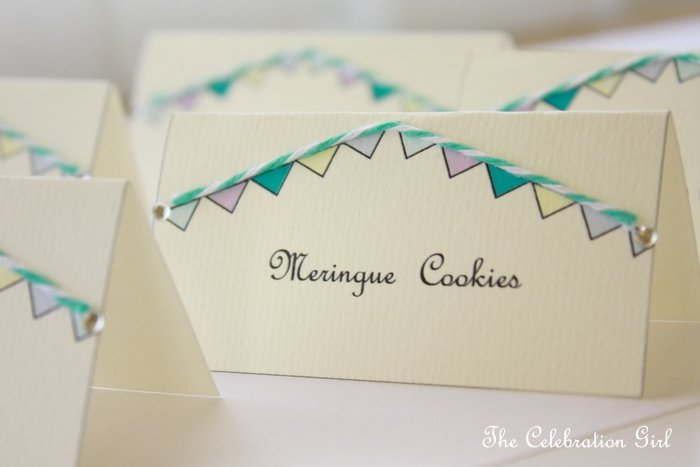
Today I’m bringing you a very easy DIY for making food labels for a party. Why add food labels at all? Well, in my opinion adding printables in general (food labels, cupcake toppers, cupcake wrappers, etc) helps give a table a more polished look. These ones that I will show you how to do today are super easy and fun to make, and can be tailored to many celebrations.
A few weeks before my birthday I had ordered The Twinery’s Sample Pack which contains 8 gorgeous, vibrant colors of baker’s twine. When I ordered them I had in mind a craft I am planning for my kids’ birthday, but when I saw the colors Caribbean and lilac, I wanted to include them in my own birthday celebration as well.
I browsed the internet and went to my local craft store for inspiration and decided to design very simple food labels, to which I could add the twine. So, using only Microsoft Publisher (I’m not confident in Corel, Photoshop or any other design software) and inspired by my blog’s logo, I designed a very simple aqua, lavender and grey bounty flag and wrote the names of the food I was planning to serve in French Script. Designing the flag was simply a matter of making a row of triangles, adjusting their size and filling them with colors. Easy enough for me! I then printed the labels on pale ivory textured cardboard paper (It took me only an A4 size page) and got ready to embellish them!
This is what I used to do it:
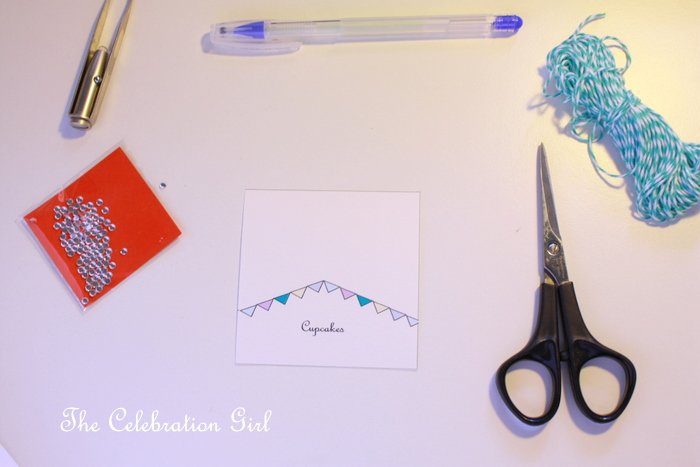
– 1 glue pen
– Baker’s twine in Caribbean (As I previously said, I purchased mine from The Twinery, and I am mentioning this because not all shops ship their products to Europe, and because I am very satisfied with how fast the pack arrived and with how beautiful the colors are.*)
– A pair of scissors
– Scrapbooking gems
– Tweezers
– Food labels
And here is what I did:
1) I put a dot of glue on the left hand corner of the food label’s bounty flag
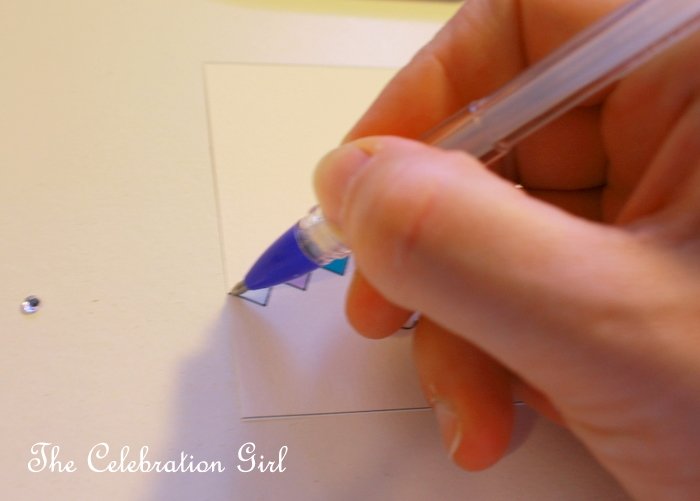
2) Using tweezers, I added the scrapbooking gem, and pressed for a few seconds in order to make sure it had adhered properly.
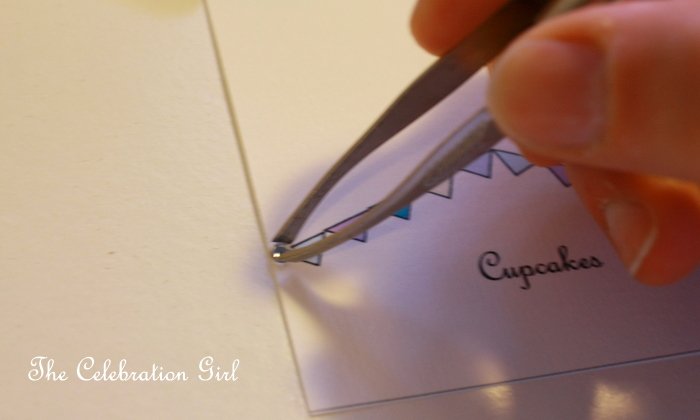
This is how it looked like when added:

3) I then repeated steps 1 and 2 on the other corner. The label was looking like this by then:
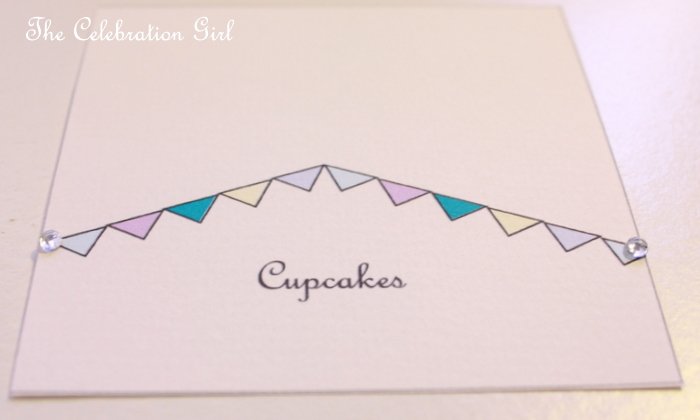
3) I drew a line of glue all along the upper part of the bounty flag
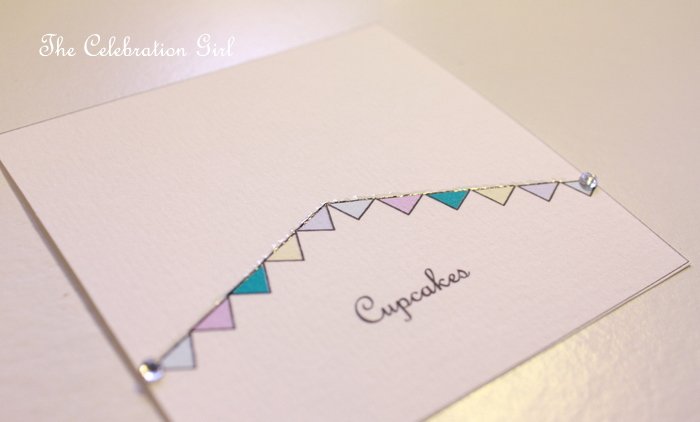
5) After that, I immediately attached the twine. I tried both Caribbean and lilac and preferred the former for these cards, but both colors are gorgeous.
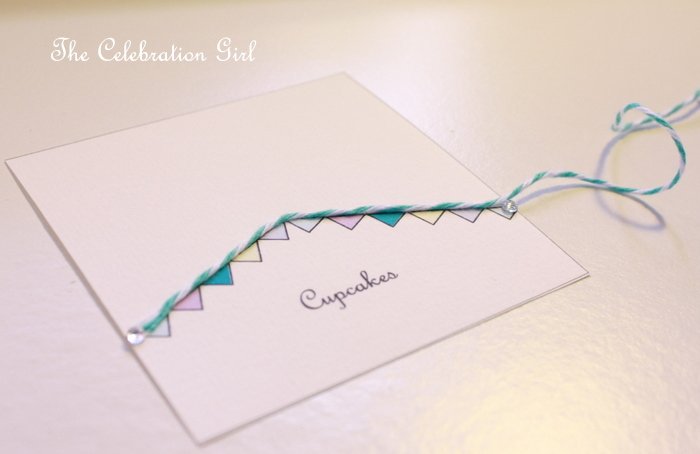
6) I pressed the twine unto the card for a few seconds and, when I was confident that it was properly attached, I cut the excess from the border, just above the gem located on the right-hand corner. This is how the label looked by then:
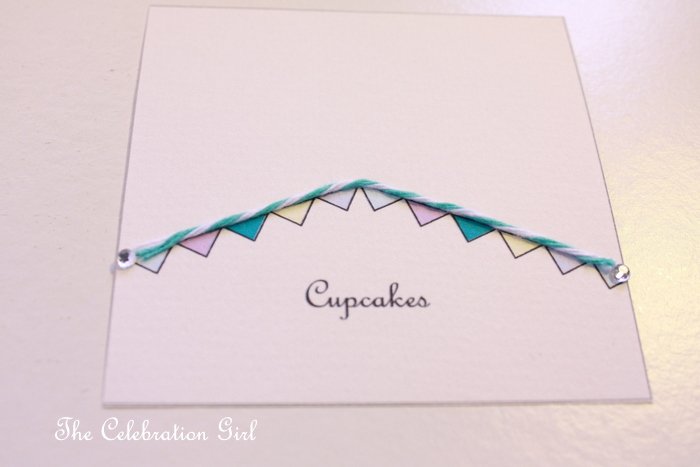
6) I finally folded the label just above the upper portion of the flag and it was finished!
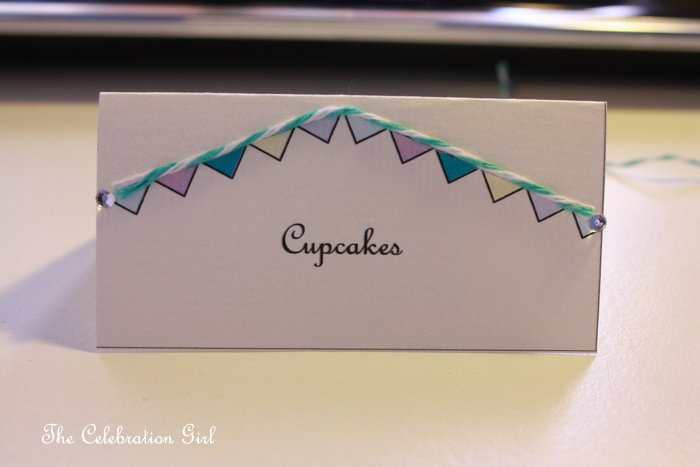
This is how they looked in daylight
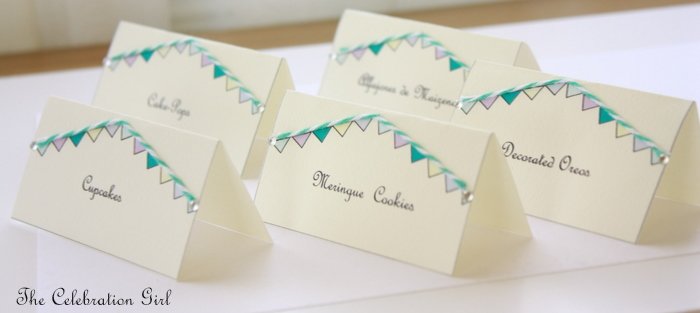
I find them simple, yet girlie and pretty, and I believe the design to be versatile. One could use the same idea for a circus/parade party, for a 4th of July celebration, etc, by simply changing the flag’s colours and the twine used and avoiding the use of gems.
Have you ever handcrafted your own food labels/invitations or other printables using different materials? If you have, please share! I would love to see what you have done!
Have a lovely weekend and see you next week with more recipes and ideas!
* NOTE: I receive no compensation of any kind for the recommendations I make in this blog. I simply mention what works for me, and provide the corresponding links so that readers have all necessary information. If you purchase something I recommend by clicking on the amazon widget, I will get a commission within their sales’s associate program, but you are free not to do it that way. My only aim is to provide my readers with accurate information on what products I find good and reliable.